
5 Signs Your San Diego Home's Grout Needs Professional Attention
Discoloured lines, crumbling joints and lingering damp smells are early warnings that mopping will not fix. Here is how to spot them before they become a bigger problem.
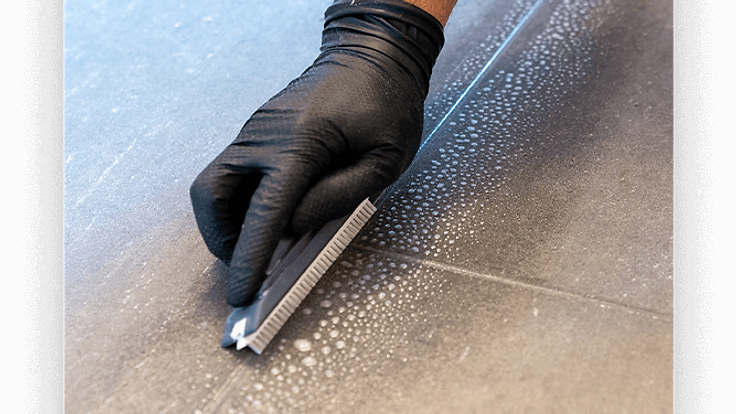
Grout is the hardest-working material in your home and the least appreciated — until it fails. Because it is porous, it absorbs everything: water, soap, cooking grease, spilled wine, and, in San Diego, a constant supply of hard-water minerals. Most homeowners only call us after the damage is well advanced. Here are the five signs we tell everyone to watch for, while the fix is still simple.
1. Discolouration that will not lift
If your grout has gone grey, yellow or brown and no cleaner or home remedy makes a difference, the soil is no longer on the surface — it is inside the grout. Mopping pushes dirty water into the pores faster than it pulls soil out, which is why grout gets darker in the busiest lanes of a kitchen or hallway. Professional heated extraction opens the pores and flushes the embedded soil out rather than smearing it around.
2. Cracked, crumbling or missing grout
Grout cracks when it loses its flexibility and grip — from movement in the floor, from moisture cycling, or simply from age. Cracks are not cosmetic: they are open channels letting water through to the substrate under your tile. Left alone, one cracked joint becomes a loose tile, then a rotted subfloor or a leak into the room below.
3. Grout lines that stay dark and damp
Look at your grout an hour after the floor dries. Lines that stay darker than their neighbours are absorbing and holding water. Saturated grout is a short step from mould, efflorescence and substrate damage. In showers, persistent damp lines are a sign the seal has long gone — or the shower is holding water behind the tile.
4. A musty smell that returns after cleaning
If a room smells damp a day or two after a thorough mopping, the odour source is not on the surface. Mould and bacteria living inside the grout (and sometimes under loose tile) re-wet every time you clean and keep pumping out that smell. Cleaning the surface will never reach it.
5. Mould that comes back within weeks
Black spotting along shower grout and silicone is mould rooted inside the pore structure. Bleach lightens it for a while, but it regrows from inside the very same pores. Professional treatment removes the growth and its food source, and color sealing then closes the pores so mould has nowhere to take hold again.
What professional restoration actually does
For most homes, the fix is a two-step process. First, a deep heated-extraction cleaning removes years of embedded soil, soap residue and mineral build-up. Then, grout color sealing recolours and reseals the lines in the shade you choose — the same grout can go from tired grey to bright white, or be matched to a new look. Sealed grout is non-porous, so future spills and moisture sit on the surface instead of soaking in, and routine mopping keeps it genuinely clean.
If you ticked even one of the five signs above, an inspection costs you nothing — and the earlier it is caught, the smaller the job.
Want this handled professionally?
Our San Diego technicians clean, seal and restore tile and stone of every kind — with free, no-obligation quotes.